

Bass Coast Council split over aboriginal committee pay day
The Bass Coast Shire Council has voted to establish a new First Persons Advisory Committee to provide a “First Persons perspective relevant to Council policies, plans, projects, and services”. But there was a major sticking point for some of the councillors.


THE Bass Coast Shire Council has voted to establish a new First Persons Advisory Committee of up to five Aboriginal and Torres Strait Islander people who will, among other things, provide a “First Persons perspective relevant to Council policies, plans, projects, and services”.
But a sticking point for four of the nine councillors at last Wednesday's meeting, including Crs Bauer, Edwards, Halstead and Thompson, who ultimately voted against the shire’s new First Persons Framework policy, was the condition that members of the committee be paid $200 each to attend quarterly meetings of the advisory group.
However, while the $800 per annum payment for each member of the committee was identified in the report presented to council, few details were offered about the ongoing costs, beyond the following:
“Finances: Year 1 implementation actions under the Framework will be delivered within existing operational budgets. Future initiatives and projects identified through implementation of the Framework will be considered through future Council budget processes where required.”
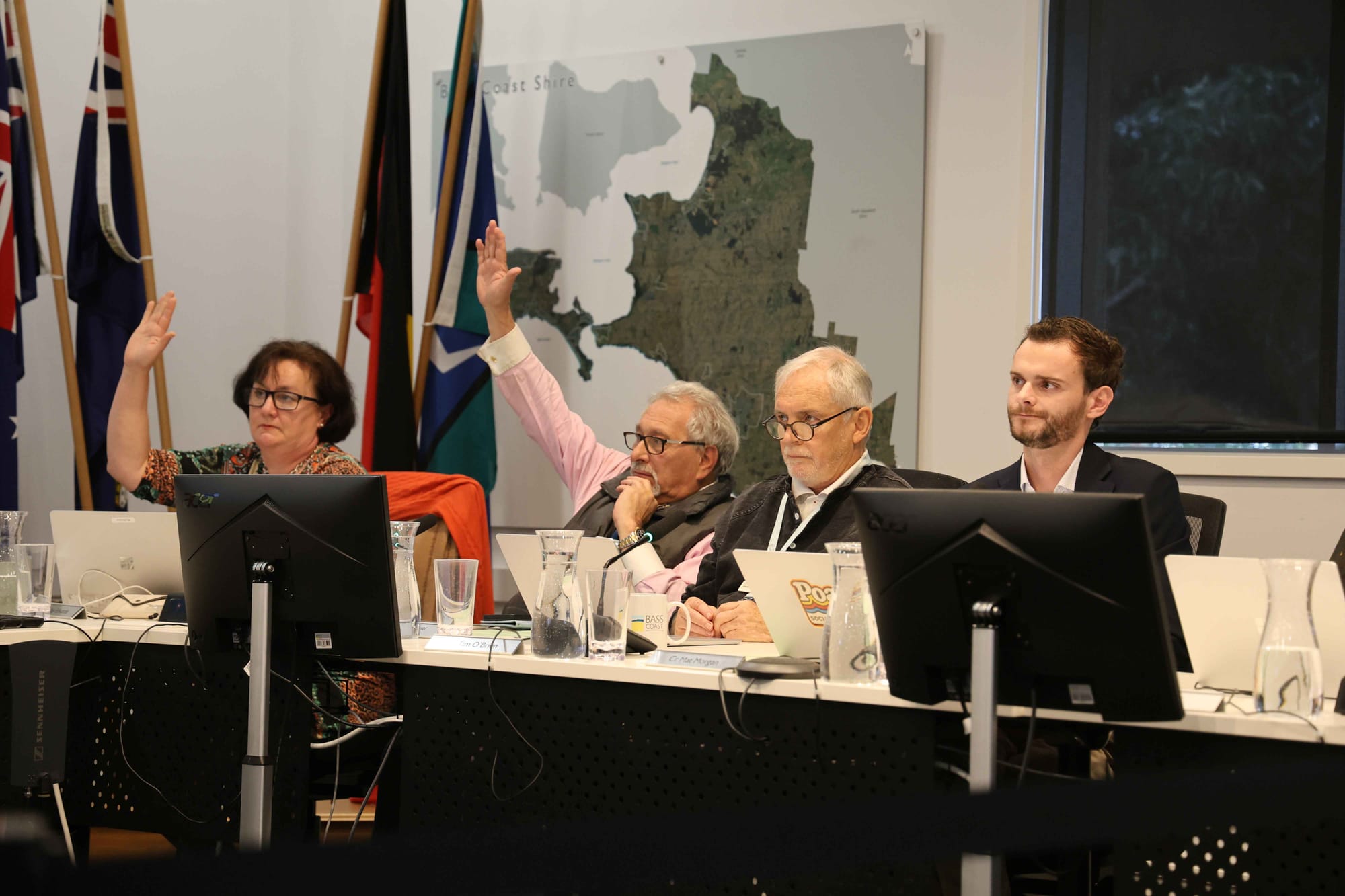
Cr Jan Thompson was the first to raise her concerns about members of the new committee being paid for their participation while community members on a range of other council committees contributed their time voluntarily.
“Thank you, Mr. Mayor. I really appreciate this framework coming together, and I think it's a great initiative of the council and the people involved. The one thing that does concern me, though, and sitting on quite a few committees, is the payment system that each member gets paid $200 per meeting per person,” said Cr Thompson.
“That's $800 per year, and that concerns me, because I'm on, as I said, I'm on three or four committees, and none of our committee members get paid, so I don't know what the justification is for the payment.
“But I endorse the framework, and I support it, but I just note that my concerns on the payment system not being across all committees. Thank you.”
Cr Ron Bauer sought clarification, from General Manager Community and Culture Jodi Kennedy about the proposal to pay committee members.
“As included in the papers, yes, and that is best practice and was developed in consultation with the Bunurong Land Council, which is how they do it across all other municipalities,” said Ms Kennedy.
Cr Meg Edwards also raised her concerns about the payment which she claims “enshrined discrimination”.
“Thank you, Mr. Mayor. I respect every member of our community, regardless of their identity, and find discrimination, including reverse discrimination, offensive,” said Cr Edwards.
“It is not clear to me how much money it will take to deliver, in addition to the sitting fees, within operational budget, and if this proceeds, will be the only group that meets, aside from the audit committee, that is remunerated for their input.
“Nor is it clear to me how it will assist any real or perceived disadvantaged groups or move forward together. The Bunurong Land Council already exist. Why does council, whose role is not to discriminate, going down this path of adding to the operational budget and duplicating what is already undertaken by other bodies?
“Any indigenous person is already open to stand for council and be elected, just as we all are. We do not need another body.
“Our core infrastructure and services, which do not discriminate on identity, is all that we should be delivering as a responsible use of ratepayers' money.
“There is not an area of our existing council services or infrastructure, to my knowledge, that excludes people based upon their identity, and I believe it's a sad day when we enshrine discrimination,” she said.
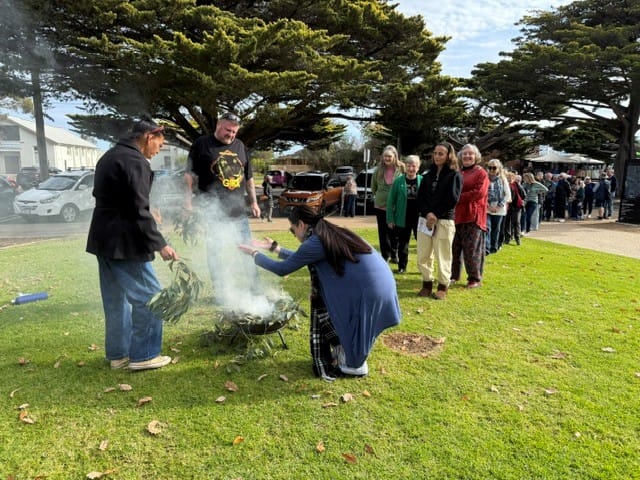
Several councillors spoke enthusiastically about the establishment of First Persons Advisory Committee to advise council with Crs Bell, Morgan, O’Brien Temby and Tessari voting in favour.
Cr Mat Morgan, who moved the motion “to endorse the First Persons Framework as Council’s whole-of-organisation approach to strengthening reconciliation, cultural safety, and engagement with Aboriginal and Torres Strait Islander peoples”, including the establishment of an advisory committee said it was part of an ongoing commitment to building relationships.
“I'm pleased to support the recommendation before us today, and to endorse the First Persons framework, as well as establish a First Persons Advisory Committee,” said Cr Morgan.
“Reconciliation isn't a single event, it's an ongoing commitment to building relationships, sharing power, and creating institutions that are culturally safe, accountable, and inclusive. This framework represents a small but important step in that journey,” he said.
“For too long, engagement with Aboriginal and Torres Strait Islander communities has too often been project by project, dependent on individual relationships or, frankly, just goodwill. While those efforts have been made with good intentions, they lack consistency, clear governance and organisational accountability, and this framework aims to change that.
“It provides staff and councillors with clearer pathways for engagement, while recognising that cultural authority always has and always will rest with First Nations peoples themselves.
“I particularly welcome the establishment of the First Persons Advisory Committee. Importantly, this committee is not about council decision making or council making decisions on behalf of Aboriginal communities. It is about ensuring that decisions affecting First Peoples are informed by their voices, their knowledge, and their lived experience.
“That is what genuine partnership looks like.
“This work also builds on a very strong foundation. As a council, we have an opportunity to create stronger relationships with the Bunurong Land Council Aboriginal Corporation, to learn from traditional owner knowledge and ensure our services, planning, and decision making better reflects the history, culture, and aspirations of First Peoples.
“But ultimately, this work benefits our whole community. It strengthens social inclusion, it deepens understanding of the place we all call home, and helps create a Bass Coast where everyone feels respected, represented, and connected.”
He went on to thank the shire’s officers, Bunurong Land Council and the Bass Coast Reconciliation Network for helping to develop the policy, looking forward to seeing meaningful action in the years ahead.
Cr Tracey Bell, Cr Tim O’Brien and Cr Jon Temby also spoke in favour, Cr Bell saying the initiative was overdue and Cr Temby saying the framework was critically important to better understanding the impacts of colonisation.
Cr O’Brien said the fundamental problem with our relationship with First Nation’s People was “making decisions about them without them” which this “wise step” was designed to address.
While listing the roles and responsibilities of the new committee, the terms of reference for the First Persons Advisory Committee also laid out the “Limitations”, as follows:
The First Persons Advisory Committee has no authority to:
• Make decisions on behalf of Council
• Approve, endorse, delay, pause, or veto Council decisions, projects, or policies
• Direct Council staff or influence operational decision-making
• Require Council to seek advice on all matters
• Replace statutory decision-making, delegated officer authority, or Council resolutions
• Speak on behalf of Council or First Persons communities
• Make decisions regarding Council budgets or resource allocation
• Act as a media spokesperson unless expressly authorised by Council
The policy hasn’t been introduced in isolation.
The State Government has made it a requirement that Local Government engage with Traditional Owners and their local Aboriginal Community Controlled Organisations (ACCOs).
But not just engage, to have representatives of Traditional Owners “embedded” in council decision making, right across the board:
From the Department of Jobs, Precincts and Regions ‘Ministerial Good Practice Guideline and General Guidance for Councils Engaging with Aboriginal Victorians’ (updated in 2023):
“It is critical that Traditional Owners are able to contribute to council planning on land and Country management, ACCOs are embedded in council planning for service delivery, and the broader Aboriginal community is involved in council planning on culture and connection. This includes but is not limited to when local councils initiate reporting and planning requirements under the Act or wish to engage with the community on new policies or programs.
“To ensure that council planning, reporting, policies and programs are inclusive and respectful, it is critical that Aboriginal voices are listened to and drive council planning processes. The more inclusive and respectful local council planning and reporting is, the better the outcomes that can be achieved for the community.”
Other council committees
According to a spokesperson for the council, independent members of Council’s Audit and Risk Committee and the independent chair of the Chief Executive Officer Employment Matters Committee are paid an allowance per meeting.
Here is a list of the other committees that have Councillor and community representation on them where members don't receive an allowance.
- Access & Inclusion Advisory Committee
- Arts & Culture Advisory Committee
- Bass Coast Natural Environment Advisory Working Group
- Rural Engagement Group (REG)
- Australian Coastal Councils Association Inc. (ACCA)
- Municipal Emergency Management Planning Committee (MEMPC)


