Cultural celebration at South Gippsland Hospital


TIMBER from a pin oak tree outside Foster’s South Gippsland Hospital was put to good use in furthering efforts to promote awareness of Indigenous culture, the results celebrated through a ceremony on the site last Wednesday.
The tree was deemed unsafe after dropping branches, meaning all but the bottom section of its trunk had to be removed.
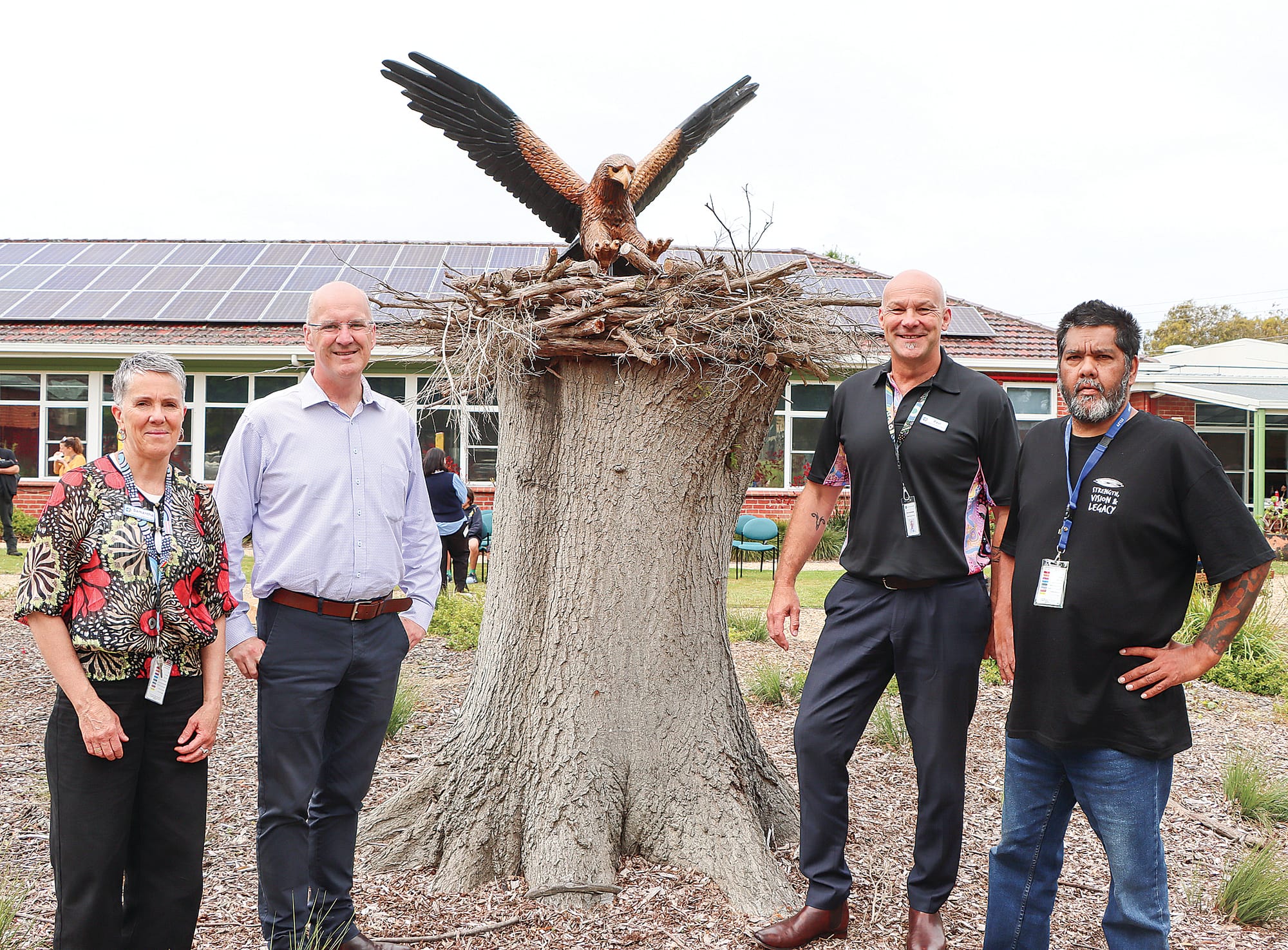
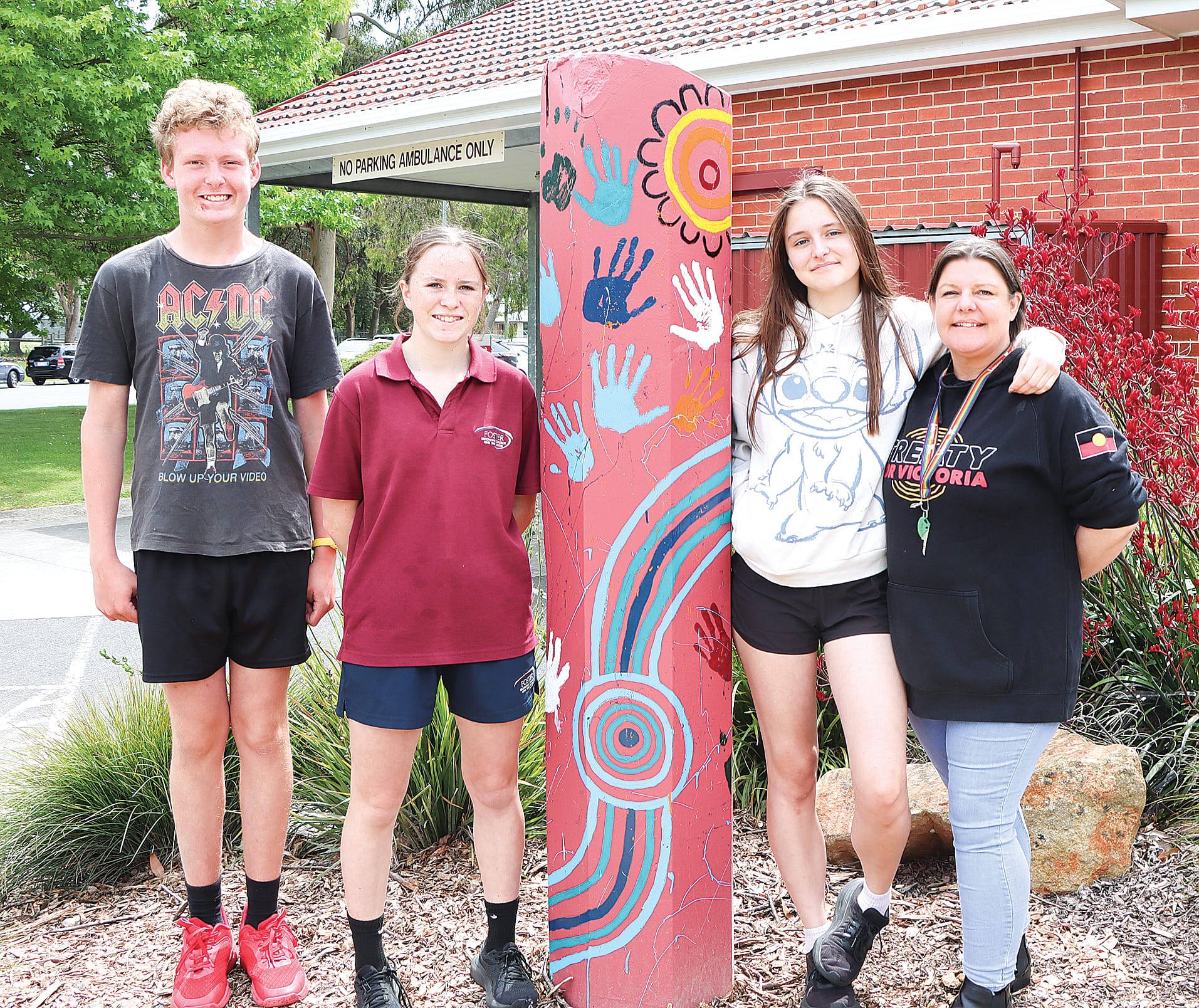
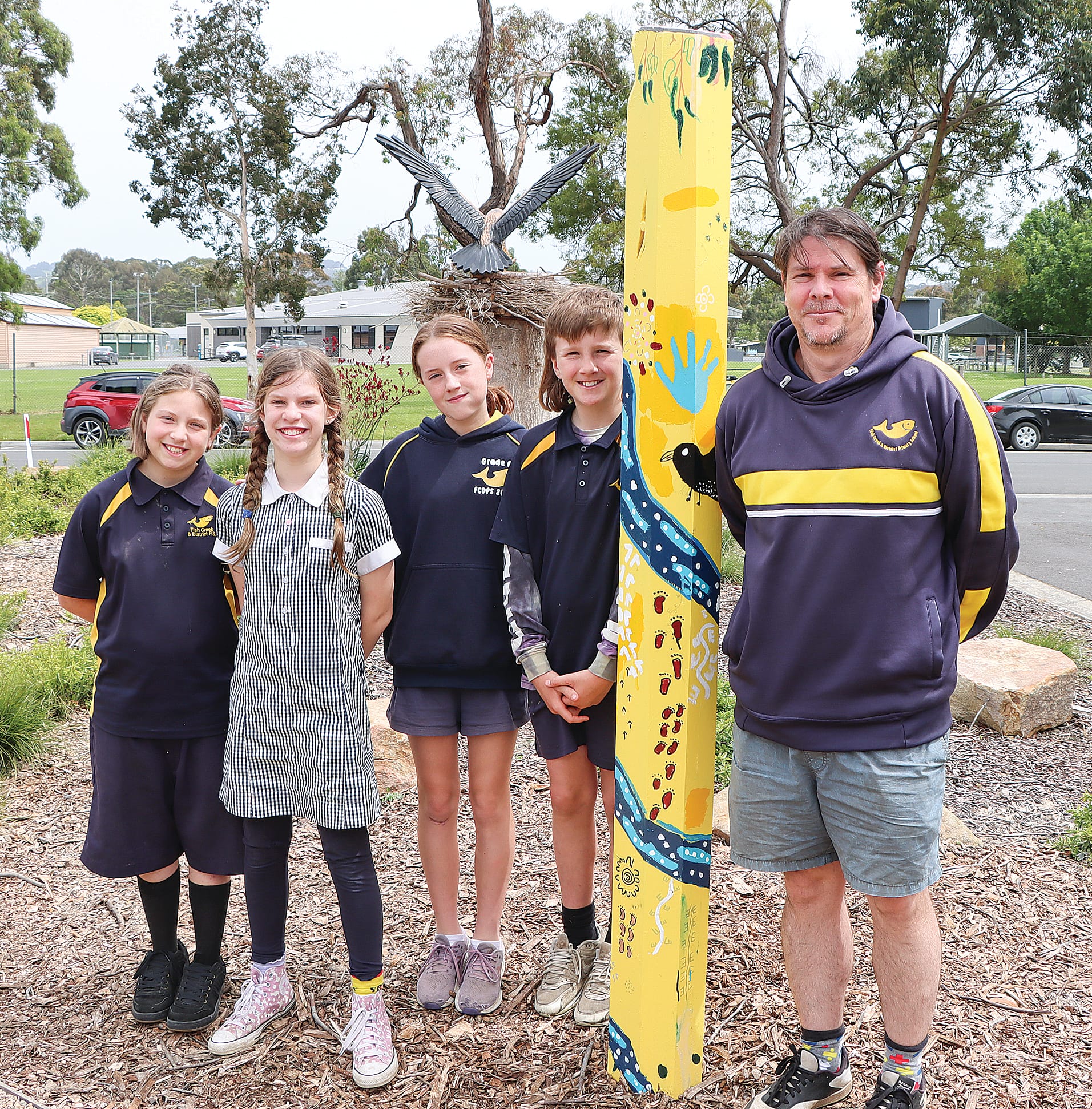
Wednesday’s event served a dual purpose, acknowledging the completion of four totem poles, each painted by students from a different local school, as well as a spectacular sculpture of Bunjil the wedge-tailed eagle by Leongatha-based chainsaw artist Andrew Noble.
While timber from the tree was repurposed into totem poles through the generosity of Amber Creek Sawmill operator Dan Bright, the initial idea of Mr Noble carving his eagle into the remaining tree trunk at the hospital proved impractical due to the trunk’s condition.
However, in a creative twist, the trunk was featured as the base for the eagle’s nest.
The hospital’s Aboriginal Liaison Officer Kane Horvath was instrumental in the project, expressing delight in the enthusiastic involvement of participants from Foster, Fish Creek and Toora Primary Schools and Foster Secondary College.
He enjoyed working with the children, a number of whom have some Indigenous heritage.
South Gippsland Hospital chief executive Paul Greenhalgh is thrilled to have Mr Horvath on the staff, helping celebrate First Nations culture and broaden awareness of what it entails, describing the latest initiative as “a good news story”.
Mr Horvath acknowledged the assistance of Amber Creek Sawmill and South Gippsland Shire Council, along with everyone who has helped with the project, elaborating on the role Mr Bright played.
“He donated a lot of his time to mill these fallen branches, and he allowed us to go and use the sawmill to dress the timber, plane and sand it,” Mr Horvath said, the timber needing to be prepared appropriately before painting.
The hospital’s Director of Community Care, Samantha Park, explained that the four Aboriginal-inspired totem poles carry lots of stories and symbolise shared effort and community partnership as well as illustrating deep respect for the land on which they stand and the local community.
Mr Horvath spoke of the significance of the area in which the totem poles and Bunjil are located, seeing it as an ideal place for local schools to experience cultural days and activities, with other community members also welcome.
Wednesday’s attendees heard from students and staff of the schools involved in the totem pole project about the symbolism entailed.