

Fish Creek quarry plans spark health fears
Residents fear silica dust health risks as Fish Creek Quarries seeks approval for new shale pit on Meeniyan-Promontory Road just 25 metres from neighbouring homes


Fish Creek Quarries' proposed new pit for extracting shale rock about five kilometres out of town of Fish Creek on the Meeniyan-Promontory Road is causing anxiety for nearby residents who are worried about impacts on their health and businesses.
Those concerns centre on the threat presented by silica dust, a known carcinogen, that Fish Creek Quarries' office manager Emma Hicken acknowledged on ABC radio is in the rock the business extracts.
"There is silica dust present in a lot of rock material, and there is silica dust present in the rock we dig up at Fish Creek Quarries, but we have protocols in place to ensure there aren't any harmful effects to the community or our workers," Ms Hicken said.
"The dust will be reduced with the new pit because now we are aware of the implications of it, and we are willing to do things to stop the dust, so, we're looking at chemical suppressants that can help reduce the amount of dust, as well as tree screening and things like that," she stressed.
While she is adamant the business already uses water to suppress dust at its current quarry, residents have claimed to the Sentinel-Times that it is rarely used.
"We use it on any days when we think the dust might be an issue," Ms Hicken said when asked for clarification by the Sentinel-Times in relation to water use for dust suppression.
She explained the chosen chemical dust suppressant would be added to the water truck's tank, with Polo Citrus, a biodegradable citrus-based solution, being considered for its environmentally friendly nature.
"With the water, we've got to do it multiple times a day; with this suppressant, it should only be done once a day if that," Ms Hicken said, adding the chemical helps form a thin crust to contain dust, achieving the added positive of reduced water use.
When the Sentinel-Times enquired why residents shouldn't be concerned, Ms Hicken said, "If you do your research regarding silica dust and silicosis, it's after prolonged exposure of working directly with the substance, so our workers are going to be at the forefront of it."
She stressed protocols are followed to protect their health as well as that of residents.
A major area of contention is the size of the proposed new pit, with Ms Hicken stating it will be only slightly larger than the current one, but residents argue it is not only about its initial size.
Representing the Prom Coast Guardians on Mim Hook's ABC Gippsland Morning program the day after Ms Hicken's appearance, Sita Morton spoke of the Work Authority area that would include the new pit and its surrounds, stating it comes right to her back fence, being only 25 metres from her house.
Ms Hook pointed out that Fish Creek Quarries says of the proposed site the whole area isn't the actual mine pit, it's just that they must show on the map the whole working site, asking if that was reassuring.
"Not really because their current quarry has now reached the boundaries of its Work Authority area, hence the reason they want to start a new pit," Ms Morton responded, remarking that the Work Authority for the proposed quarry is four times the size of that for the existing one.
"I agree with what they're saying; the current pit has come to the edge of the Work Authority but that's not what's going to happen with the new one," Ms Hicken said.
She argues things have changed since the original Work Authority area was approved, with a buffer zone now having to be included in that area, which is a 50-metre native vegetation zone.
"There will be at least 50 metres around the edge of the Work Authority," Ms Hicken said.
The Sentinel-Times visited concerned residents, firstly Rima O'Sullivan of Golden Creek Olives, who is worried about health implications of quarry dust for people as well as its impact on olive trees and the business.
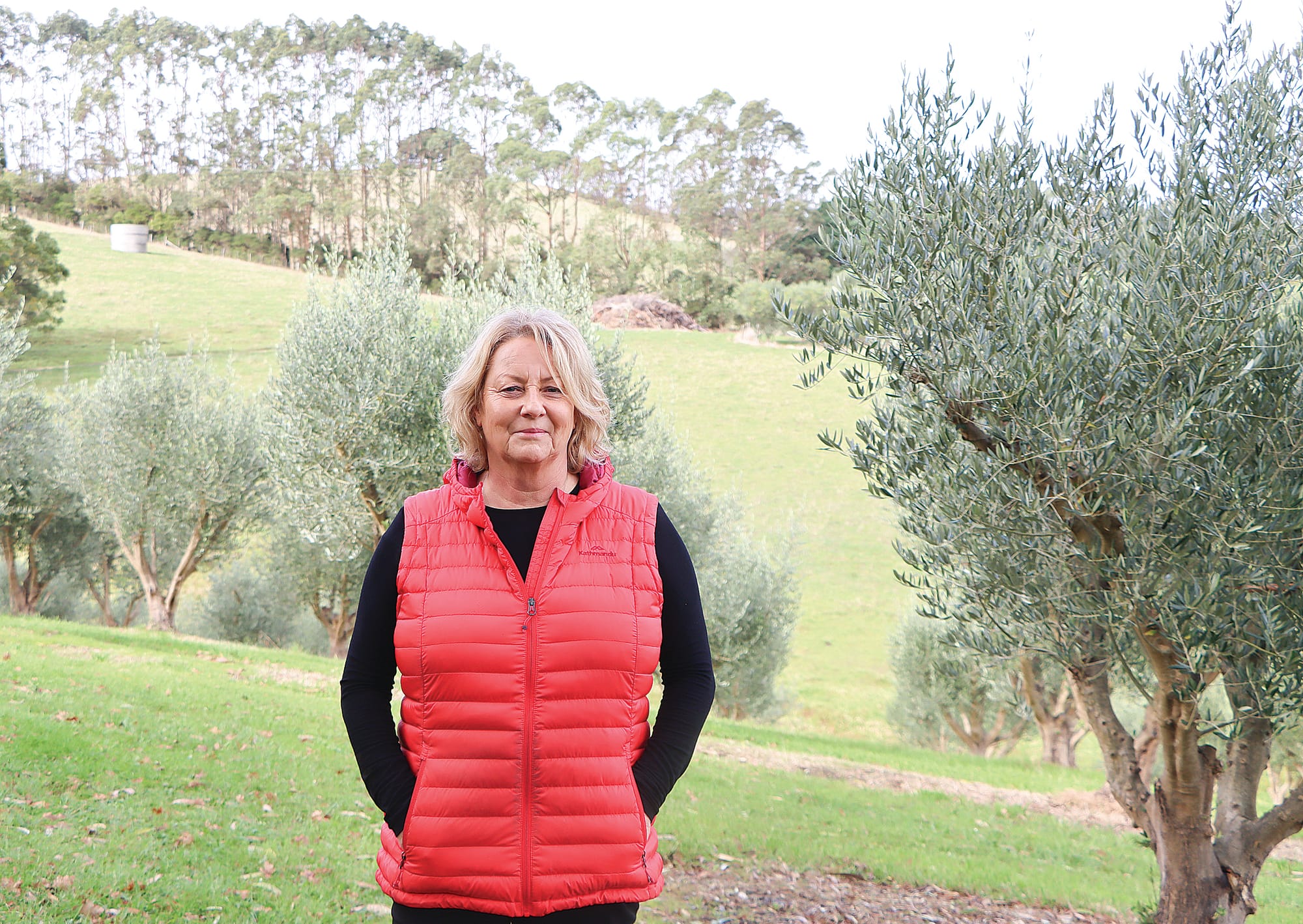
She pointed out the current pit is low down, with trees around it, and doesn't cause her much trouble, although the experiences of other nearby residents may be different, but the new quarry would be on an exposed hill.
"What they want to do now is too close to homes and businesses," she said, having noted that it's not only about where rock extraction takes place but also associated works within the Work Authority area.
The Sentinel-Times asked Ms Hicken about her assertion on the ABC that the hill would help with dust suppression, given resident concerns the new pit would be on top of the hill.
"The Work Authority does include a hill but we're not going to just drop a bomb on the top of the hill and start digging; our plan is to come in from the east side of the hill, so the hill will still be there as we cut into the side of it," she said.
"The current pit, how it is now, was technically on top of a hill but because we've dug into the side and then gone deep, gone down and in, and we've planted trees all around, you can't even see it," Ms Hicken said, adding that should the new pit be approved, the same approach would be taken.
With shale rock being a handy material for farmers to use on cattle paths within their properties, Ms O'Sullivan said farmers can operate small-scale non-commercial quarries on their properties, but a Work Authority needs to be in place to conduct commercial extraction.
Getting such authority is something she believes may be much harder now were the quarry business just getting started, given how much more is now known about the harm of silica dust.
Another nearby resident, Kim Kemper, showed the Sentinel-Times how close the Work Authority area for the proposed new quarry comes to her boundary fence, pointing out it is halfway between the fence and a nearby piece of disused machinery.
"The quarry's consultant stood here and she went, 'Gee, that is close, isn't it?'," Ms Kemper said.
She and her partner bought the property with the building then derelict, checking with council and others whether anything would be going on there and deciding to renovate the house after being assured all was well.
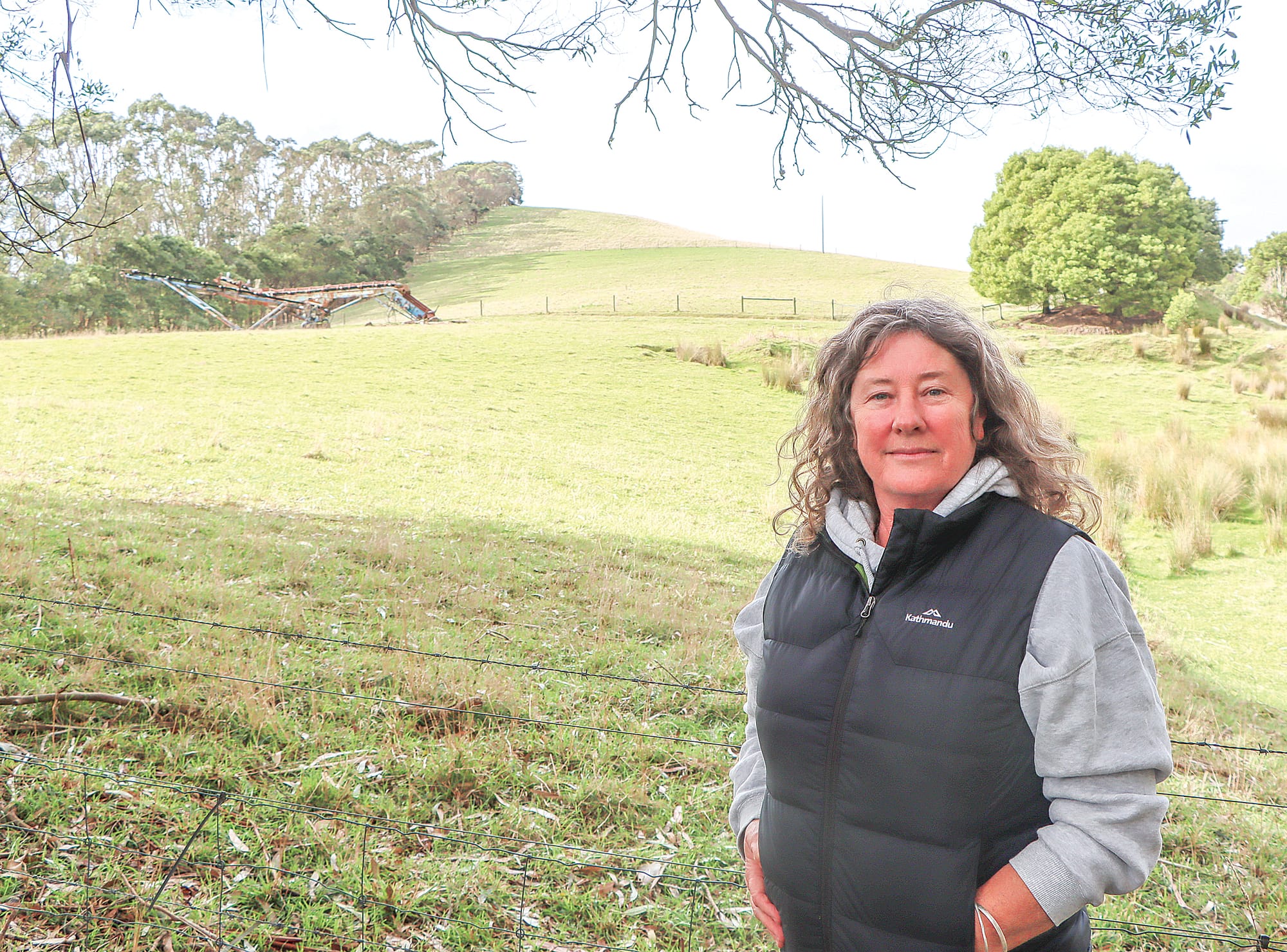
"Next thing you know, in goes a permit (application) for a quarry behind us," Ms Kemper said.
The Sentinel-Times moved to Ms Morton's home, standing inside and looking through a window at the nearby fence, the other side of which the Work Authority area extends to.
"They might say the excavation pit is going to be some small spot, but we know they can run trucks, equipment, machinery and other works outside of the excavation site," she said, reiterating her argument that the excavation pit can expand over time within the Work Authority area.
Ms Hicken said the business was a small-town, local operation just trying to get by.
"I've created a Facebook Q and A page where I'm trying to be transparent and community members can voice their concerns there; I will listen and I'll take it to the boss and we'll see what we can do," she said.
That Facebook page is titled Fish Creek Quarries Q and A hub.
While the residents the Sentinel-Times has spoken to acknowledge the Facebook page, they argue they need more formal communication outside social media.
"We're always open to discussion, and we do want more community consultation but we're not there yet; this is just a proposal and we've got so many steps to go through before we get to community consultation," Ms Hicken said, adding that the heat the issue has generated recently is why she created the Facebook Q and A page.
Asked for details of the steps that need to happen before community consultation, Ms Hicken said she will be having further conversations with environmental consultants and will provide the Sentinel-Times with more details in due course.
A South Gippsland Shire Council spokesperson responded to the Sentinel-Times' request for comment on the Fish Creek quarry issue.
"Council has not yet received any planning permit applications for the Fish Creek Quarries site, and before any application can be lodged with council, the proponent must first obtain the necessary licences from the Victorian Government," the spokesperson said.


