Phillip Island murder: 'Too late for justice, not for the truth'
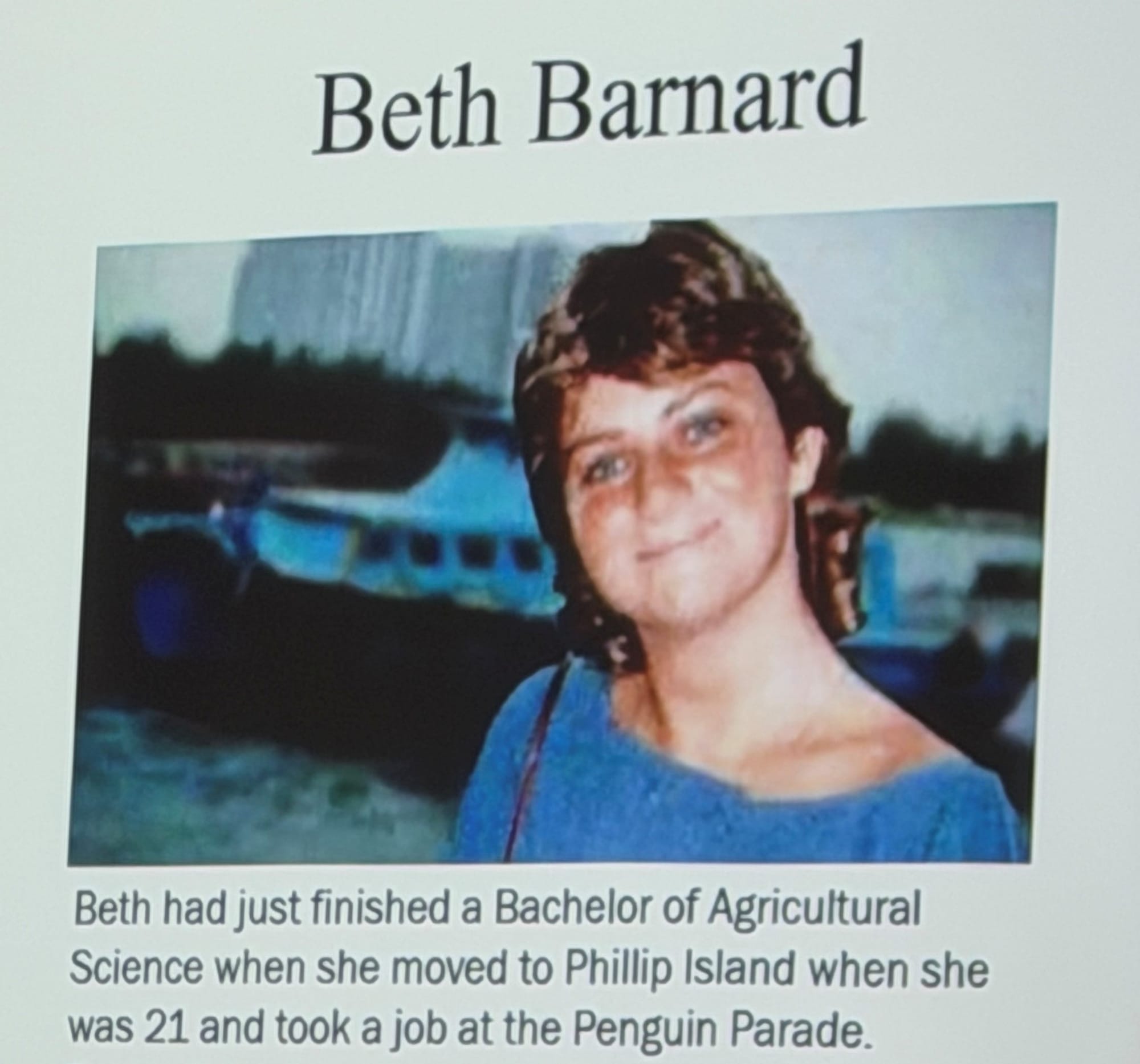
A lot has been written about the Phillip Island murder of 23-year-old penguin parade staff member Beth Barnard and the disappearance of local woman Vivienne Cameron, 40 years ago, in September 1986. Some might say too much. But it’s not going away.


‘Vanishing Vivienne’ book goes global
A LOT has been written about the Phillip Island murder of 23-year-old penguin parade staff member Beth Barnard and the disappearance of local woman Vivienne Cameron, 40 years ago, in September 1986.
Some might say too much.
But it’s not going away.
In 1988, after a coronial inquest officially concluded that 36-year-old Vivienne had killed Beth before taking her own life, reporting in the mainstream media died down.
"Although [Vivienne's] body has not been found, I am satisfied that she is dead, and that she leapt from the bridge into the water," Victorian Coroner BJ Maher concluded at the time.
"And I further find that the deceased contributed to the cause of death."
That was until a controversial book hit the shelves in 1993, ‘The Phillip Island Murder’, co-authored by Melbourne teacher Vikki Petraitis and journalist Paul Daley, which began to probe the police investigation and some apparent inconsistencies in the case.
The Phillip Island community was still reeling from the horrific incident at the time the pair was researching the book, and in many cases, refused to speak to them about it. The local newsagency declined to stock the book when it was published and reportedly refused to sell The Age newspaper on the day it reviewed the book for readers.
In the years that followed, the book prompted a number of cold case inquiries on TV including Sensing Murder in 2005, where psychic detectives provide “evidence” they thought might be helpful and Under Investigation, hosted by Liz Hayes on Channel 9, aired September 13, 2001.
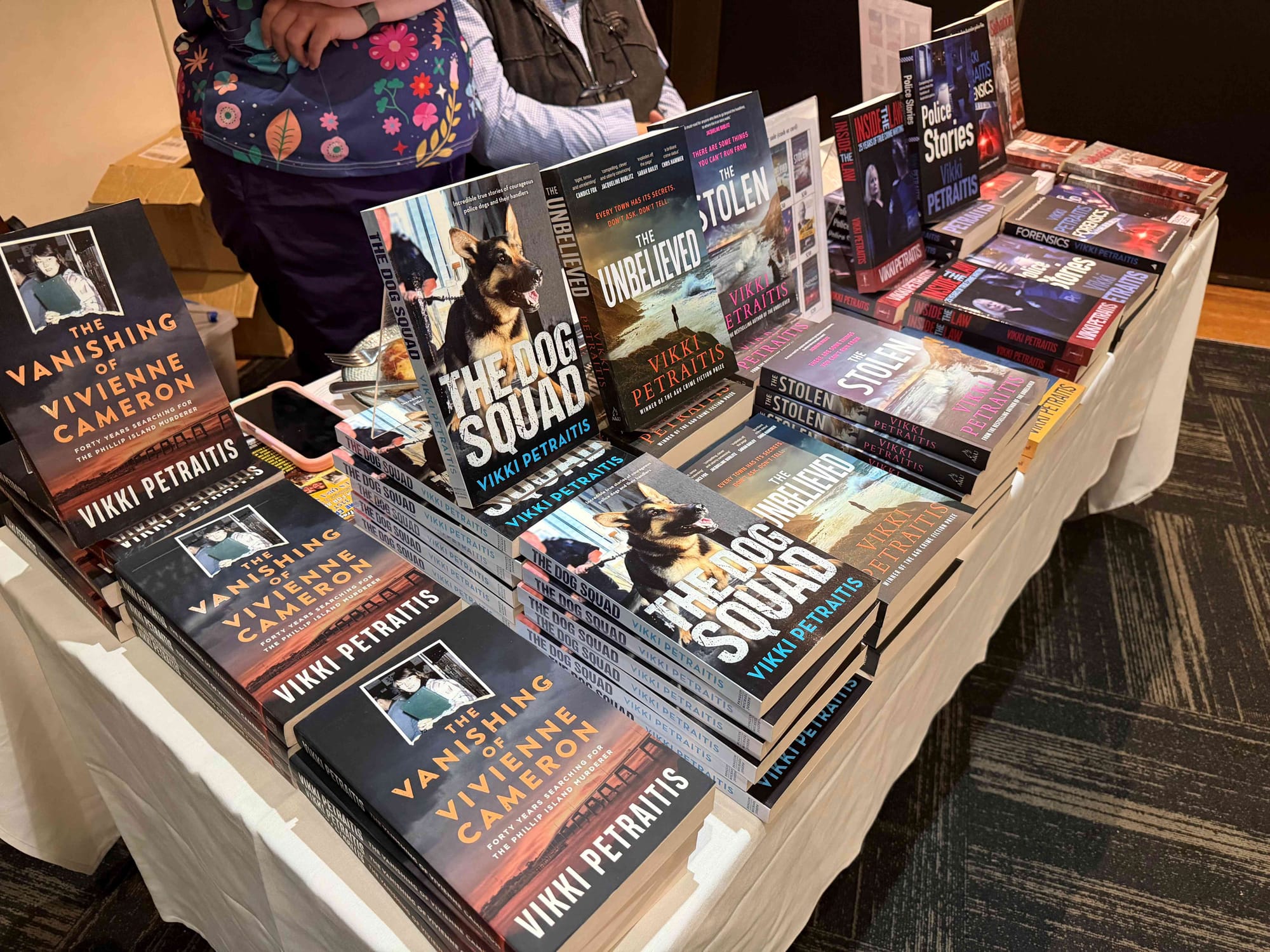
The Phillip Island Murder was also one of the earliest stories featured on the award-winning true-crime podcast ‘Casefile’, launched in 2016, titled ‘Case 80: Beth Barnard’ in 2018 which prompted a more extended version, launched in October 2025, ‘The Vanishing of Vivienne Cameron’.
The podcast juggernaut and burgeoning interest in true crime has so far prompted 3.5 million people to download the 10-episode ‘Vanishing’ series worldwide, which was supercharged by the discovery of a buried skull and human remains at Silverleaves on Phillip Island in January this year.
At the time, police issued the following statement, hosing down a possible connection with the Beth Barnard-Vivienne Cameron case, but it didn’t stop speculation on social media, and interest in the ‘Vanishing’ podcast, running wild.
"At this stage there is nothing to indicate the bones are linked to any active missing persons case," the police statement read.
"The forensic testing of the bones is expected to take some months, and it has not ruled out that the bones may be historical."
So far, there has been no public statement about the origins of the bones.
Ahead of the podcast series, more people came forward to provide details about the Phillip Island Murder, not previously covered in the police investigation, coroner’s inquest and the original Petraitis-Daley book, so Vikki Petraitis decided to write the story once more, probing the new information and how it reflected on the murder investigation and coronial findings.
By now a prolific author of more than 30 titles including ‘The Frankston Murders’, ’Once a Copper’, ‘The Dog Squad’ and ‘The Unbelieved’, set to be turned into a TV series by Moonriver in partnership with the ABC, BBC and Soapbox Productions, her new book was a much deeper dive into the circumstances surrounding Beth Barnard’s murder and the baffling disappearance of Vivienne Cameron.
The book, repeating the title of the podcast, ‘The Vanishing of Vivienne Cameron’ was released on January 28, 2026, and on the back of the Silverleaves’ discovery, has achieved strong sales, including at the Cowes’ bookshop, Turn the Page.
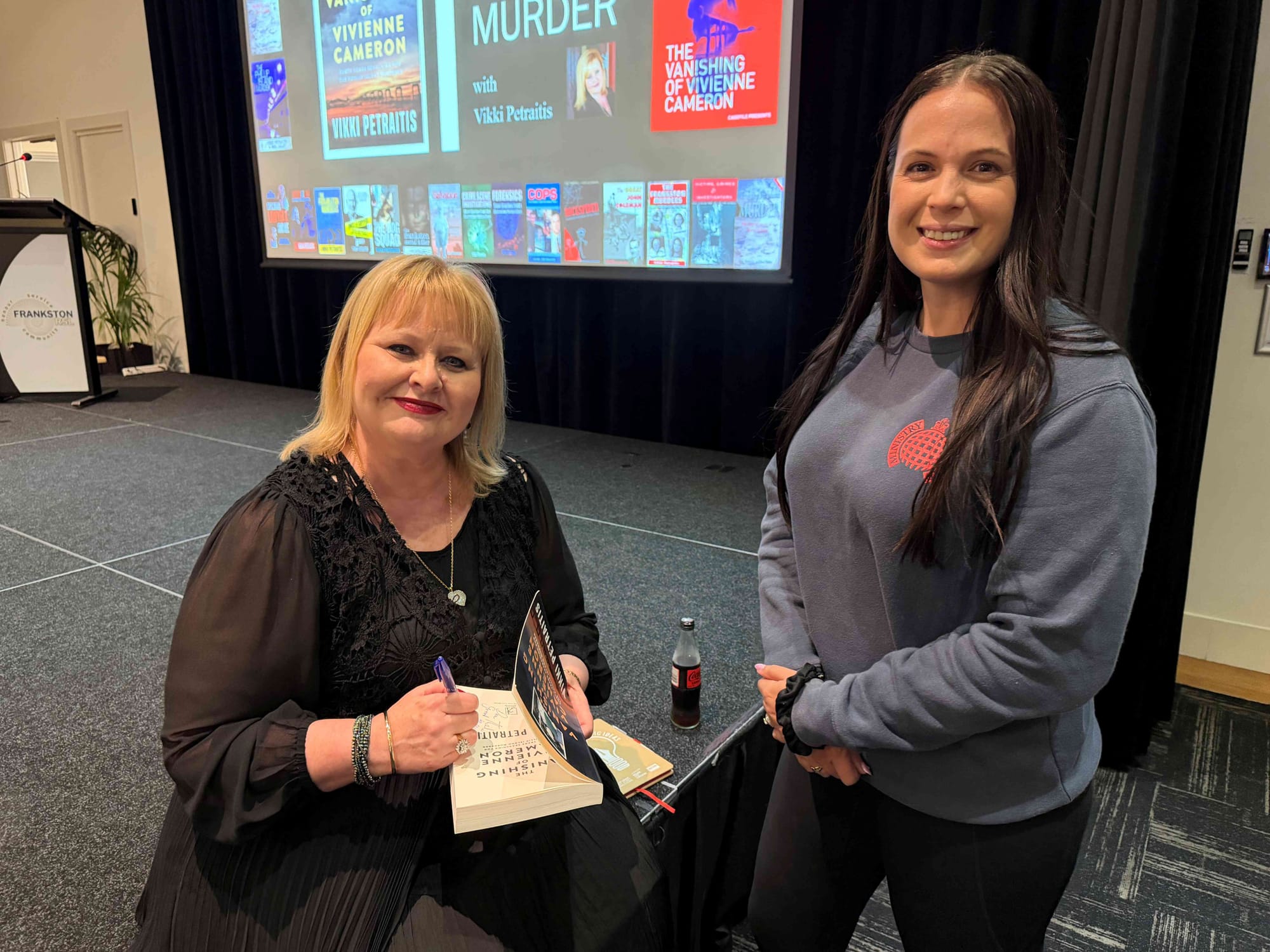
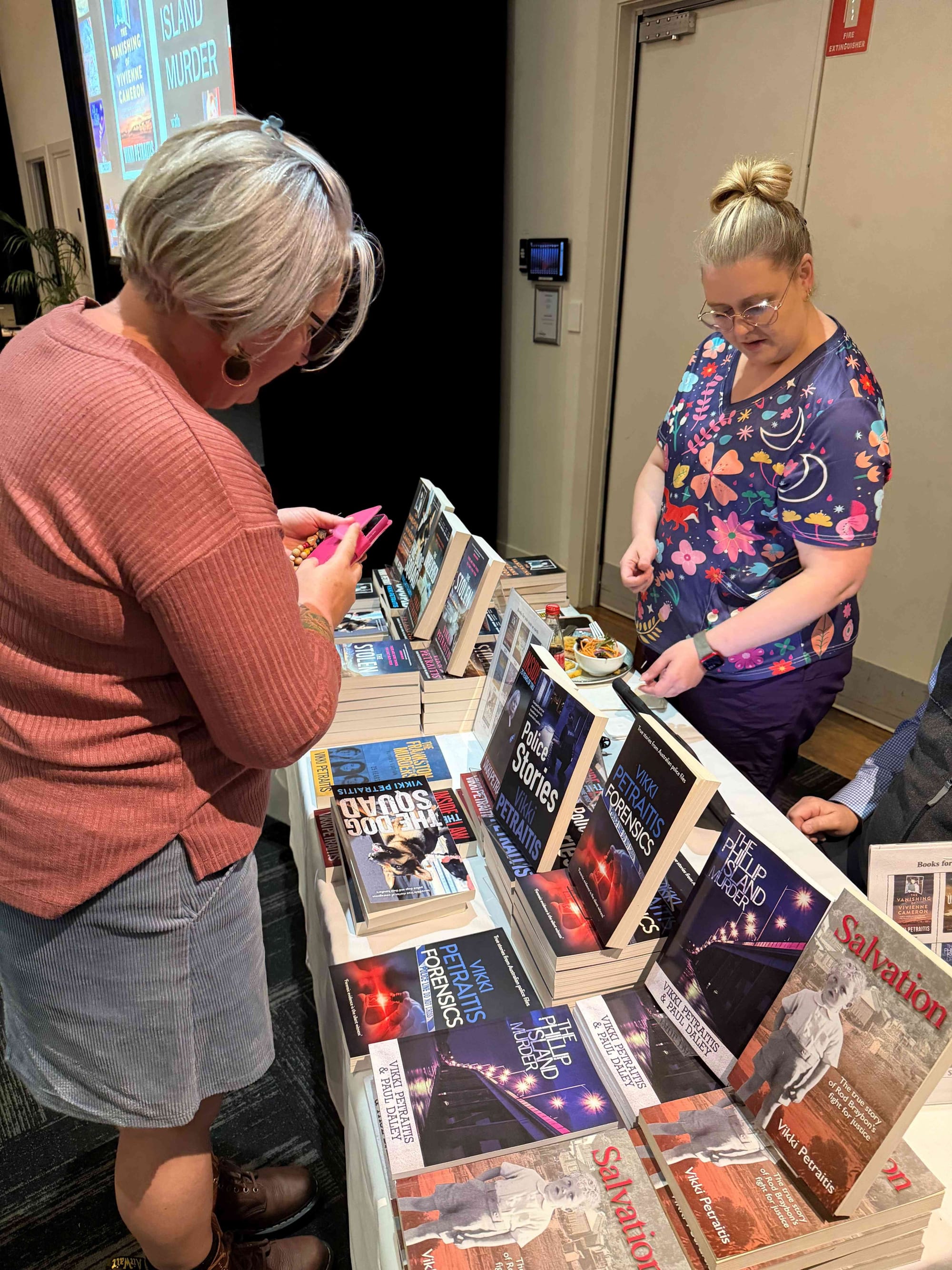
Ms Petraitis has appeared at a number of readers’ nights to discuss the book, including a sold-out event at the Wonthaggi Workmen’s Club on Friday, March 13 and last Wednesday, April 29 at the Frankston RSL, attended by more than 300 people.
Such has been the interest in the book that it will soon receive a global launch, on May 21.
Speaking to the Sentinel-Times about the book, the public interest and the further details that have come to light, Ms Petraitis said it was always about seeking truth and justice for Beth and Vivienne.
“The global launch of The Vanishing of Vivienne Cameron means that the book will be available overseas. A lot of true crime books stay in the country of origin. Mine always have,” said Vikki, speaking after the public presentation at Frankston.
“The advent of podcasting has given our cases a wider audience around the world.”
Asked about the success of the podcast and the book to date, Ms Petraitis said that while she was aware there had been 3.5 million podcast downloads worldwide, she wasn’t kept informed about book sales.
Asked why she decided to write the story again, Ms Petraitis said she felt compelled to do so.
“I've always told this story to seek truth and justice for Beth and Vivienne. There are so many friends and relatives who loved these women, and the silence around this case has always felt like it was trying to erase all memory and discussion about them.
“I kept telling the story because every time we did, new witnesses came forward with new and important pieces of information.
“In recent times, the police have refused to take their statements, which is worrying because no one has ever been brought to justice for the murder of Beth Barnard.”
Asked about the sensitivities that still existed about the case on the Island, Ms Petraitis said she understood it.
“I understand that on the island this case is not an easy one to talk about because the silence around it started from the minute it happened.”
She expanded on this at the Frankston RSL, saying there was so little information about the case at the time, and such a willingness to shut it down, that few people knew the circumstances, even to this day.
“I understand that some people don't want to hear about it and they are free not to listen. They are free to remain silent, and I respect that.
“What I find interesting is when those people tell other people to stay silent.
“Two women died back in September 1986, and if people interested in finding the truth are being told to be silent, it begs the question: what is being hidden within that silence?”
Speaking at Wonthaggi and also at Frankston, Ms Petraitis said she received “a flood of information from the moment the podcast dropped” including details that should still be investigated by police.
Together with information collected as part of the investigations for the two books, Ms Petraitis said she believed it contributed to there being “at least a reasonable doubt” that Vivienne Cameron did not murder Beth Barnard.
“I don’t think there’s any room for justice now, but there is room for the truth and for all those people who know Beth and Vivienne, the chance to know the truth,” said Ms Petraitis.
“My conclusion,” she said, “is that Vivienne didn’t do it.”
“And I say to the people who want me to shut up and for others not to talk about it… what have they got to hide? What is to be gained by not talking about it?
“I called the book ‘the Vanishing of Vivienne Cameron’ but it might also have been called ‘the Vanishing of Beth Barnard’ because that’s what has happened to these two women, they’ve been made to vanish by the silence that has enveloped this case locally,” she said.
“I remember talking to a detective about the Phillip Island case many, many years ago. I won't name him, but I think his attitude was typical of the time.
“I said that I’d spoken to some of Vivienne Cameron's friends and they had a hard time reconciling the kind woman they knew with the vicious killing of Beth Barnard. The detective said something like ‘Oh, you know what women are like. They all get together and gossip’.
“Um, we call it talking,” I said, “but anyway, go ahead”.
"Yeah, they tried to tell us all that stuff, but it doesn't mean anything. She just snapped.”
Ms Petraitis said she doesn’t believe a woman like Vivienne Cameron, with her background and a demonstrated willingness to help her own community, could have “just snapped” and done what she is accused of doing.