

Venus Bay Nippers delighted with rescue chopper visit
By Andrew Paloczi NIPPERS at Venus Bay Surf Life Saving Club were in for a treat on Wednesday with a Beach 1 visit from the Westpac Rescue chopper and the chance to hear from aircrewman Jack Slykhuis and pilot Pete Nelson and ask them questions...


By Andrew Paloczi
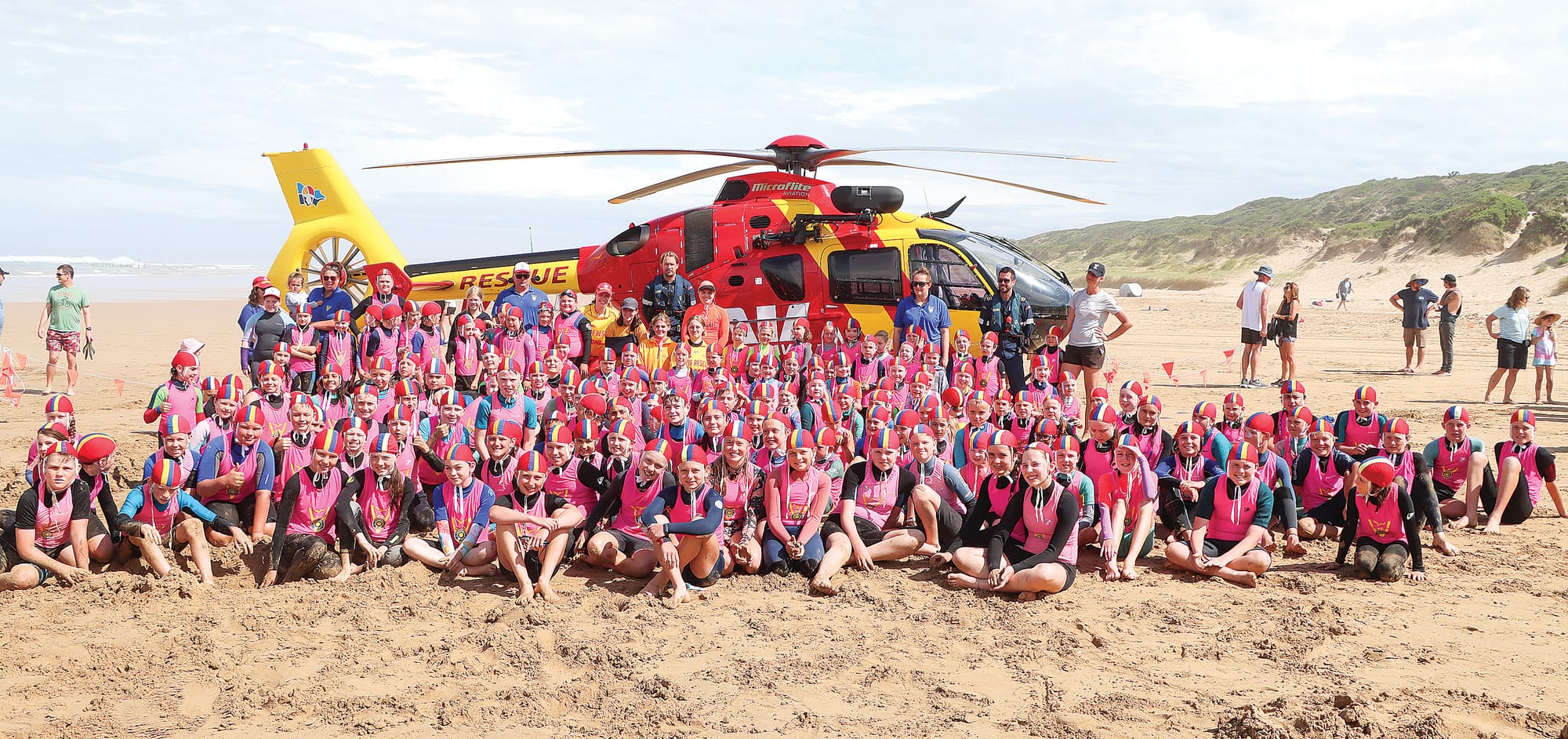
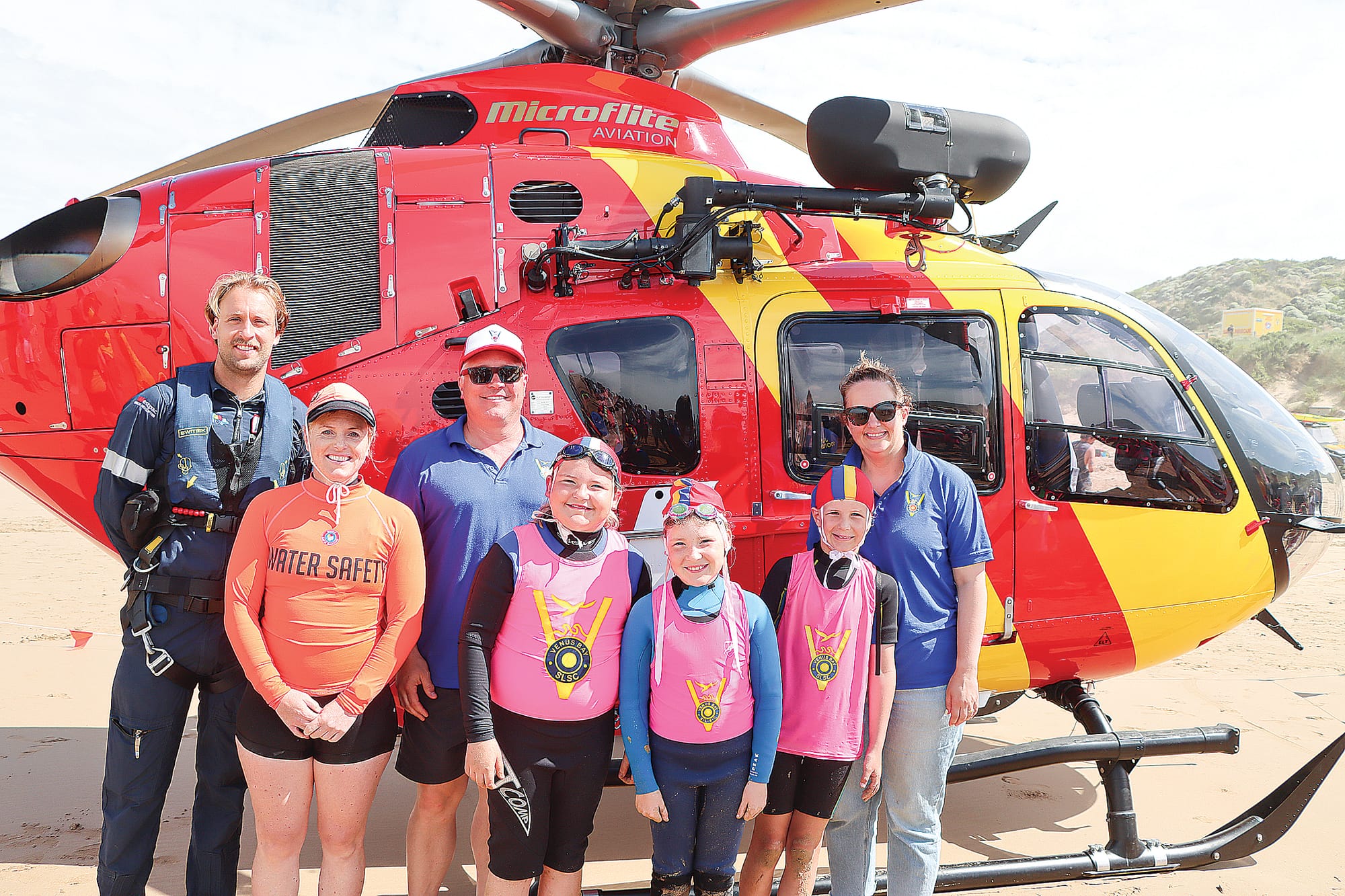
NIPPERS at Venus Bay Surf Life Saving Club were in for a treat on Wednesday with a Beach 1 visit from the Westpac Rescue chopper and the chance to hear from aircrewman Jack Slykhuis and pilot Pete Nelson and ask them questions.
Jack told the excited youngsters that he too started out as a Nipper, leading to his involvement in life saving and ultimately the opportunity to patrol from the sky, something he has relished doing for the past eight years, having started aged just 19.
“It’s a great job,” he said of the volunteer role, with only pilots paid.
People not swimming in patrolled areas and being towed out to sea by rips result in the largest number of rescues the helicopter crews carry out.
Coming to the aid of people whose boats have flipped, and land rescues are other situations that crop up.
Victoria is serviced by two Westpac Rescue helicopters and the larger of the pair, ‘Life Saver 30’, was the one visiting Venus Bay.
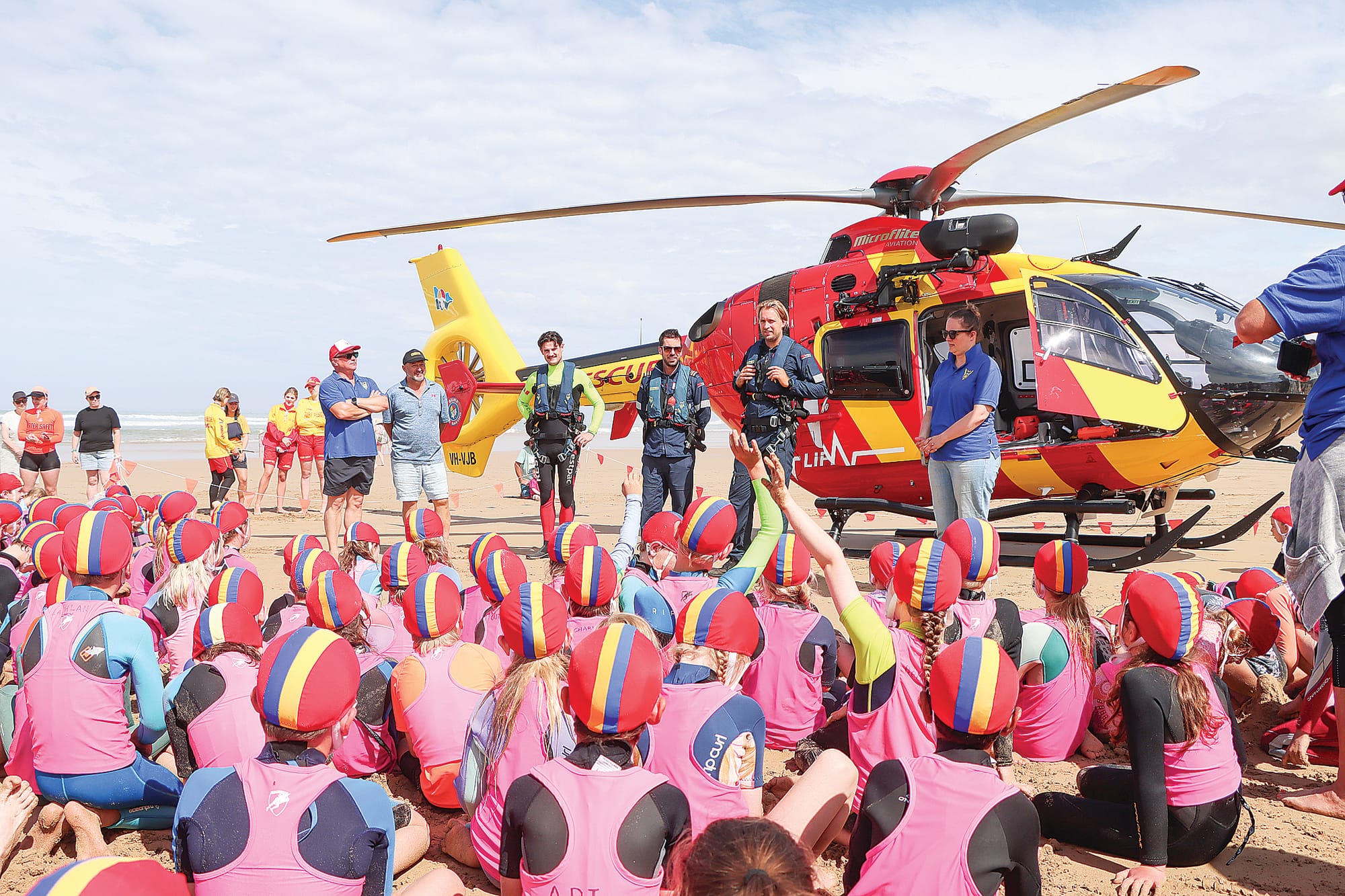
Jack showed his audience the chopper’s winch used in rescue operations, sharing interesting facts such as the aircraft’s ability to fly at over 200 kilometres per hour and that it has two engines.
“If we land in the water, that’s a bad day for us,” he responded when asked if that could be done.
However, he added that crews are trained in evacuation procedures should a forced water landing occur, a challenging situation with the chopper’s top-heavy nature certain to flip it upside down.
Jack told the Sentinel-Times the rescue helicopter volunteers make a big commitment, with most doing around 200 hours per year in addition to their study or paid employment.
“Providing the community with a service and knowing I’m keeping people safe is the most rewarding aspect of the job,” he said.
Jack was inspired by a rescue helicopter visit while undertaking his Bronze Medallion course as a teenager, that being the moment he realised that life saving qualifications could lead to air patrol opportunities.


